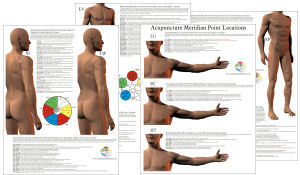
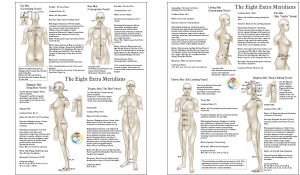
Acupuncture Charts
Hand Acupuncture Charts, Meridian Atlas, Five Element Theory...
Acupuncture Formulas
Acupuncture Meridians
Acupuncture Products Directory
Free Acupuncture Quizes
Test yourself on point locations, indications, five element theory and command points.
AcupunctureProducts.com Quizes
Free Acupuncture Quizes
Test yourself on point locations, indications, five element theory and command points.
Reflexology Chart Reflexology is the practice of stimulating points and areas on the foot to affect changes to the linked organs of the body for better health.
Acupuncture Point Location Quizes
Foot - 7 Quizes
Welcome to Acupuncture Products free quiz section. Match the five points with their correct location. Click on the answer button to view the answers. Download our free point location booklet to study before tacking the test. There are two numbering systems with the bladder meridian, both point numbers are listed. Choose a body area to start with.
Download the point locations HERE
Foot: Quiz | 1 | -2 | 3 | 4 | 5 | 6 | 7 |
Acupuncture Point
LV-3 Taichong
ST-41 Jiexi
SP-1 YinBai
BL-66 Zutonggu
BL-63 Jinmen
| Point Location
A: In a depression anterior to the 5th metatarsophalangeal joint.
B: 0.1 cun posterior to the corner of the nail, on the medial side of the great toe.
C: On the dorsum of the foot at the midpoint of the transverse crease of the ankle joint, approximately level with the tip of the external malleolus in a depression between the extensor digitorum longs and hallucis longus tendons.
D: On dorsum of the foot in a depression distal to the junction of the 1st and 2nd metatarsal bones.
E: Anterior and inferior to BL 62, In the depression posterior to the fifth metatarsal bone.
Click Here for Answers, Foot Quiz 2
|
Gua Sha: A Traditional Technique for Modern Practice
by Arya Nielsen
Description
This is the first English language book on the ancient therapeutic technique 'Gua Sha'. It is a technique commonly used in Asia and Southeast Asia by TCM practitioners, Chinese families and individuals who know and use it as part of their 'health culture'. In Gua Sha, the skin is pressured in strokes i.e. scraped (but not broken) by a blunt edge (Chinese families used a spoon). This, in Western terms, raises extravasated blood and metabolic waste which collects in muscle tissue, and encourages its departure. Gua Sha is often used to counteract muscle strain through athletic injury, back pain, and conditions beyond muscle injury alone. The result, visually, is livid discolouration of the skin which subsides in a few days, considerably faster than a bruise. For this reason practitioners in the West have been afraid of using it. However it can be a very useful technique to know how to use, and will enhance the skills of any practitioner using it while giving them another treatment method to help increase their clinical skills.This book brings the technique alive for Western practitioners, with clear discussion of how to do it - including correct technique, appropriate application, and difficulties to bear in mind - and when to use it, and superb colour illustrations and specially commissioned line drawings to demonstrate the technique. The author is an expert practitioner of 'Gua Sha'.
Have a set of Acupuncture or TCM questions you would like to submit?
Please contact us and we will post your questions and answers.