Acupuncture Resources
Conditions Treated | Needles | Moxibustion | Cupping | Auriculotherapy | Acupressure | Gua Sha
Cupping Therapy
Treatment Options (Cupping)
 Definition
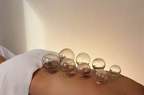
Cupping is a technique used in traditional Chinese medicine (TCM) for certain health conditions. Glass or bamboo cups are placed on the skin with suction, which is believed to influence the flow of energy and blood in the body. Cupping should not be confused with the percussive technique in Swedish massage called "cupping" or "clapping."
OriginsCupping was originally called "horn therapy" in ancient China, but variations of it have been used in Turkey, Greece, France, Italy, and Eastern Europe. Cupping has a long history of use in acupuncture practice and has been combined with bloodletting, but it is a therapy in its own right. There are specialist cupping practitioners in Japan.
BenefitsCupping is a safe, non-invasive, and inexpensive technique. It is used by practitioners of Chinese medicine to treat colds, lung infections, and problems in the internal organs. It is also used to treat muscle and joint pain and spasms, particularly in the back. Cupping can be used on people for whom the injection of acupuncture needles poses a problem or risk. Cupping therapy is thought to stimulate blood circulation.
The Art of Cupping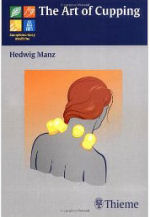

Cupping disperses and moves qi by exerting suction and pressure. Cupping is used when the qi is blocked at certain points, or when qi needs to be drawn to the surface of the body from deep within. For instance, cupping is used to treat lung infections and colds, because it is believed that the suction disperses and energizes the qi that has become blocked and stagnated in the lungs. Cups can also pull out "wind-cold" that in Chinese medicine is believed to cause lung infections.
Patients usually lie down for a cupping treatment. Cups are made of bamboo or strong glass. To create a vacuum, a flame from a lighter or a burning cotton ball is placed in an upside-down cup. When the oxygen in the cup is burned off, the cup is placed directly on the skin, where it is held in place by a surprisingly strong suction. Often, the skin inside the cup visibly rises. There are also cups available that use pumps instead of burning to create the proper suction. Cupping is generally a painless procedure.
More than one cup at a time may be used to cover an area thoroughly. Cups may be left in the same place for several minutes, or removed quickly and placed elsewhere. Cups are sometimes placed over acupuncture needles that have been inserted. Moving cupping may also be performed, by first rubbing the skin with a small amount of oil to allow the cups to slide around. After cupping, patients may remain lying down for several minutes. When cups are used to treat colds and lung infections, patients are advised to wrap up in blankets to stay warm after treatment.
PrecautionsImproper glass vessels can shatter and cause injury, and cupping may cause bruising.
Side effectsCupping causes blood to be drawn to the surface of the skin, which can cause red marks, swelling, and bruising.
Bruce Bentley - Health Traditions
Articles
Gua Sha : Smoothly scraping out the Sha.
The Subtle Cup - practice of cupping.
A Brief History of Cupping.
We provide fully accredited courses that deliver exceptional information and practical hands-on training in a friendly, creative environment. Cupping is a specialized method of treatment that requires expert instruction, backed by the kind of deep interest and decades of research and practice that inspired us to present the World's First Cupping (and Gua Sha) workshops. After completing our Master Class in Traditional East-West Cupping and Remedial Cupping, students are also awarded an Advanced Certificate in Integrated Cupping Therapy. We were also the first to teach Traditional Thai Massage in the West and remain the only school outside Thailand to be recommended by the Wat Pho School of Traditional Thai Massage (Headquarters of TTM in Thailand).
Ilkay Chirali
Cupping Therapy Articles
View Articles by Ilkay Chirali
Ilkay Chirali is a Member of British Acupuncture Council and Member of Register of Chinese Herbal Medicine, London, UK.
He is the author of Traditional Chinese Medicine Cupping Therapy
Cupping is an ancient technique - largely Eastern but also used in the West - in which heated cups are applied to the body and, as the air cools, underlying tissue is raised by being sucked part of the way into the cup. The stimulation this effects is dealt with in the context of TCM principles and theory. Includes how cupping works, ten methods of cupping, cupping with moxa and herbs, water cupping, cupping for common disorders, and precautions and contraindications.
Books on Cupping Therapy
Traditional Chinese Cupping Therapy books and supplies.