Acupuncture & TCM Articles
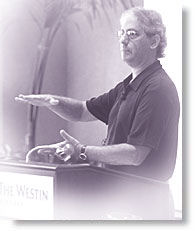
Articles by Jake Paul Fratkin, OMD, LAc
Jake Fratkin, OMD, LAc, has been in the practice of Oriental medicine since 1978. Following undergraduate and graduate training at the University of Wisconsin in Chinese language and philosophy and pre-medicine, he pursued a seven-year apprenticeship in Japanese and Korean style acupuncture with Dr. Ineon Moon and a two-year apprenticeship in Chinese herbal medicine with Drs. Zhengan Guo and Pak-Leung Lau in Chicago. He also spent a year in Beijing hospitals interning in advanced herbal medicine, specializing in gastrointestinal and respiratory disorders, and pediatrics.  Dr. Fratkin is the author of several books, including Chinese Herbal Patent Medicines: The Clinical Desk Reference, and is the editor-organizer of Wu and Fischer's Practical Therapeutics of Traditional Chinese Medicine. In 1999, he was named the "Acupuncturist of the Year" by the American Association of Oriental Medicine.
Chinese Herbal Patent Medicines: The Clinical Desk Reference
Hardback book, 1198 pages. This volume covers 1360 products, including 550 GMP level products and all of California FDB analysis on 505 products. Includes information on endagered animals, heavy metals, and pharmaceuticals. The text is organized into 12 groups, with a total of 109 chapters and includes material by Andrew Ellis, Subhuti Dharmananda, and Richard Ko. Over 80 pages of full-color photos (with English and Chinese cross-reference). Fully indexed.
Shudo Denmas Workshop at the Pacific Symposium
After studying with and observing Shudo Denmai at the Pacific Symposium in August, one can only regard him as the acupuncturist´s acupuncturist. He embodies so many of the sterling qualities we all hope to achieve: clarity of mind, happiness in manner, and sincere regard for the body´s energetic network. How to describe Shudo Denmai´s two days of teaching and clinical demonstration? His presentation proved to be inspiring, stimulating, and motivational. His art is evolving, as he truly masters his understanding of the body´s energy fields, and his ability to engage and transform it. Shudo certainly has gone beyond what he wrote in his book ten years ago, and I would like to report my observations of his workshop.

First, let me remark on his presence and approach to a patient. Shudo´s hands are his instruments, gently running along areas of the body, feeling the quality of energy at the surface of the skin. His fingers literally dance as they discover acupuncture points, and they continue that dance with the insertion and manipulation of the needle. He determines the point to treat by touch, in a matter of fact way, and I am afraid this seduces beginning acupuncture students by it´s simplicity. In fact, determining points and point location solely by feel and touch is an accomplishment that can result only from years of conscious and focused practice. His diagnosis of the root pattern starts with the pulse, but it is his fingers gently stroking the meridian, pausing at certain points, that finally determines his place of insertion.
Shudo wrote of specific insertion depths in his book with Stephen Brown, but he has now moved towards a very superficial insertion in his present practice. In what he calls “contact needling’, the needle is slightly tapped towards the skin, with an insertion less than 1 mm. It fact it barely touches the skin, and is not felt at all by the patient. Firmly contacting the base of the needle so that no further insertion is possible, he rapidly moves his right thumb back and forth across the handle, while pointing his right index finger towards the hole. He will occasionally flick the head of the needle, in movements that can only be described as extremely delicate. Feeling for the arrival of qi/ki with his left hand at the tip of insertion, and measuring its quality, he removes the needle once its effect is completed. This may take three seconds, and occasionally up to forty-five seconds. Then the needle is removed, and the point is massaged or stroked. The needle is then loaded again into the pipette (with the right, or dominant, hand), while his left hand searches for the next point to practice contact needling. The whole procedure can be described as an eloquent dance, an interplay of both his and the patient´s qi.
Shudo has evolved to this superficial level of treatment based on his success in clinical application, but the rationale is supported by energetic theory. The interior of the body, and by extension, the deeper depths of needle insertion, deal with more physical aspects: structure, blood, fluids, organs. As the energy moves towards the surface, it becomes more and more ethereal, and energetic. “The wei qi leads the ying qi’ is his explanation, meaning that when we affect the wei qi through superficial needling, this in turns guides and leads the ying qi that is in the meridian, and ultimately to the organ. Thus, when we do superficial contact needling, we actually have a greater effect on the interior than deeper needling.
Shudo recommends contact needling is almost all cases, including dispersion of stagnation in sites of kori/indurations. For example, when evaluating limbs, abdomen and back for depressions or kori/indurations, he always applys contact needling. In cases where a slightly deeper insertion is required, Shudo recommends withdrawal of the needle to contact needle depth if we intend to retain the needle. Superficial depth is also recommended for weak people, patients with emotional or stress disorders, and patients who slightly sweat before treatment.
Shudo's Protocol. With the patient prone, Shudo feels the pulse to determine the root deficiency. He then evaluates the deficient meridian to determine which point to treat. He does this by stroking certain points looking for “a depression’. This could be a physical reality, or an energetic sense. It is his primary method of determining point selection. (Usually, on the yin channels, he will find an energetic depression. On the yang channel, it is often a kori/induration.) He usually treats only one point to tonify, or occasionally, two points on the same channel. For the root patterns, he recommends the following:
Liver pattern: LIV 8, and often, LIV 1
Lung pattern: LU 9
Spleen pattern: SP 3
Kidney pattern: KI 7 or KI 10
It is interesting that he does not support this basic treatment with tonification of the mother channel, nor does he seem to sedate the father channel. (For a description of a more traditional approach to Meridian Therapy, see my article ROOT AND BRANCH, NAJOM, July, 1996).
After performing this root treatment, he goes to the abdomen, softly stroking the skin searching for any depression in the meridian´s related area. Shudo reports that in Japan, a soft kidney area is most common. He expects the abdomen to strengthen its depressed area with effective treatment. (Junji: Insert diagram of the abdomen from Shudo´s article in July, 1996).
In most cases Shudo will do contact needling to CV 12 and CV 6, or he will use five cones of direct moxa. He then does contact needling at BL 2, both sides, and also GV 20, if it is soft and depressed. He then looks for and treats specific points for the patient´s complaints that need to be treated with the patient in this position.
Following, the patient lies on his stomach, and points are evaluated on the back. In general, soft depressions are sought, with the fingers, in the intervertebral spacesalong the Du Mai. Occasionally, he will use soft pounding with a loose fist, looking for pain. Points that react are treated with contact needling or direct moxa (again, five threads or half-rice cones).
Shu points relating to the root deficiency are also treated, whether with contact needling or superficially retained needles. Shudo then likes to choose five points for direct moxa, using five cones each, choosing from the Shu points, Du Mai, or induration points around the sacral-ileac region. Following this, points are further chosen according to complaint. Finally, the patient sits up on the side of the bed, and Shudo concludes the treatment with contact needling to the trapezius and neck regions, seeking out kori/indurations.
When needles are retained, they are shallow enough that the needle flops on the skin. Usually, about five minutes is sufficient, but in certain cases, needles may be retained up to twenty or even thirty minutes.
In general, it seems that it takes about ten minutes for Shudo to complete his treatment. In his own practice, he has three beds in one room, in close proximity. If needles are retained, he can easily go from one bed to the other. As a patient is discharged, another patient comes in and lies on the bed. His wife assists him by administering moxibustion to the points Shudo has designated with his red marking pen. In this way, he probably sees between six and ten patients per hour.
Emotional stress. The original topic of Shudo´s presentation concerned emotional disorders. He sees more and more of it in the clinic, and predicts this will play a dominant role in practice in the 21st century. He feels that emotional conditions are due to meridian deficiencies, and, when treated appropriately, contribute significantly to the emotional well-being of the patient. At one point, he quoted Inoye by saying: “In psychological problems, always assume spleen deficiency’.
The following table sums up emotional correlations detailed in classical texts, and confirmed in Shudo´s clinical observation.
| |
Controls |
Emotional state in deficiency |
| Heart |
shen, spirit |
lack of joy, lack of interest |
| Spleen |
yi, mind |
obsessiveness, self-absorbed, depression |
| Lung |
po |
grief, sadness, timidity, passivity |
| Kidney |
zhi, the will |
fearfulness, lack of perseverance |
| Liver |
hun |
anger, depression, fearfulness |
Diagnosis. The following represent the key points Shudo felt are clinically relevant.
Looking and listening. Skin color of the face or inside of the arm can reveal meridian deficiencies. Green for liver, red for heart, white (pale) for lung, black (dark) for kidney, and yellow for spleen. Shen (spirit) can be evaluated via the luster, or lack of luster, of the skin. The best place to access shen is the region of the third eye, between the eye brows. There is trouble if this area is dingy and grey. As far as facial diagnosis, he proposes the following map. (Insert face diagram. Junji, please make a nice face; don´t use my drawing.)
Shen can also be determined by the voice. A clear strong voice indicates strong shen. A raspy weak voice indicates low shen.
Questioning. It´s important to know about the following: sleep, appetite, and elimination (urine, stools, menses). If these are prominent, they indicate a viscera
(zang-fu) problem, rather than a meridian problem. Also, preferences for flavors, common symptoms, and emotional states or behavior will indicate meridian deficiencies. These are listed in the following table:
| Deficient |
Taste/flavor |
Common symptoms |
| Heart |
bitter |
body feels hot |
| Spleen |
sweet |
body feels heavy; joint pain |
| Lung |
spicy |
coughing, wheezing |
| Kidney |
salty |
leakage of fluid; rebellious qi/ki |
| Liver |
sour |
epigastric fullness; subcostal tension |
Palpation requires developing the fingers as energetic antennae, so as to find depressions or indurations. Also, Shudo introduces the technique of “pinch reaction’, which is lightly pinching the skin at the site of acupuncture points, and applying a slight twist. In addition to the patient reporting pain, the practitioner will feel a fibrous quality indicating poor circulation of qi/ki. Pinch reaction can be applied to meridian points on the limbs, and the back Shu points, but is most often used along the Stomach meridian from ST 19 to ST 25, while palpating the abdomen. Reactive spots are treated with retained needle, intradermal needle, or moxa.
Pulse. Shudo examines the whole pulse, and then the six positions. A healthy pulse will show good shen, and that the stomach and spleen are strong, that digestion is good. It should be “soft with resiliency’. In fact, the whole goal of treatment is to create this type of pulse. A weak or faint pulse indicates a lack of shen and qi.
Shudo concluded his discussion on diagnosis by saying that essentially, diagnosis is difficult, but treatment is easy.
Aside from observing his treatment protocol, and treatments for specific problems (see below), Shudo offered two valuable recommendations. The first concerned self treatment. Shudo remarked that he treated himself anywhere from one to three times every day. This would be a regular balancing, or specific to any symptoms. This involves finding the primary deficient meridian and doing contact needling. (Points on the arms required keeping the needle in the insertion tube while applying rapid rotation.) If symptoms occurred during the night, he would put a needle in place and go back to sleep, allowing the needle to fall out later. The benefit of daily self needling is maintaining a high degree of health throughout one´s life. Shudo certainly attributes his own state of health to this practice.
The second recommendation was included in his discussion of mental and emotional problems. He remarked that all emotional imbalances could basically be seen as self-centeredness. A healthy emotional state involves being “other-centered’. He quoted a beautiful axiom from Tendai Buddhism: “Forget Self. Benefit Others.’ (Junji: Chinese: Wang Zhi, Li Ta; please provide Japanese. Also, use the enclosed calligraphy from Shudo somewhere in the article). I am certain that Shudo lives by this code, as reflected by his happy and light manner and personality. Of my two days with him, this is certainly the most valuable and inspiring instruction that I received.
For the participants of this workshop, I am certain that we were all impressed with Shudo´s skill. I am reminded of a quote my teacher Dr. Ineon Moon told me many years ago: “A young practitioner has twenty approaches for each problem. An old master has one approach for twenty problems.’ Master Shudo has his protocol down to an art, which he applies to all of his patients. And I am certain that, in another ten years, his art will evolve to an even higher state.
Specific Treatments.
| Abdominal bloating |
Spleen or kidney pattern. Also, LIV 8 is often indicated. |
| Appetite, poor |
Spleen pattern.
|
| Asthma |
Root treatment, use light needling only. Also, special “axillary point” about 1/3 to 1/2 from nipple to axilla: find tender induration, use intradermal needle. (Akabane uses point in axilla on nipple line, above or below by .5 cun.) Also, BL 17, DU 10, and any other upper DU point
that is reactive.
|
| Back problems |
Look for “iliac point” - any kori/induration along the crest of the ileum starting at the sacral-ileac junction. Treat. Also. BL 25, BL 27, and the Josen point (junction of L5 and S1). Also, any kori/induration between BL 23 and BL 52, and at GB 30.
|
| Costal pain |
Look for indurations, depressions, or tenderness from St 19 to St 21. Treat. Evaluate for liver pattern.
|
| Costal pain or distension |
Root treatment, use light needling only. Also, special “axillary point” about 1/3 to 1/2 from nipple to axilla: find tender induration, use intradermal needle. (Akabane uses point in axilla on nipple line, above or below by .5 cun.) Also, BL 17, DU 10, and any other upper DU point
that is reactive. |
| Depression (emotional) |
Usually lung or spleen deficiency; possibly liver or kidney.
|
| Dizziness |
Most common is Liver pattern. Treat LIV 1 and 8. Could be Spleen pattern. Also, DU 20 (if soft), Vertigo Point on antitragus, esp. if fibrous or sore. Also, SJ 5, LI 10.
|
| Dreaming, excessive |
PC 7. Look for Spleen pattern.
|
| Ear inflammation |
Moxa to KI 2.
|
| Electro-acupuncture |
Injures qi/ki.
|
| Emotional or mental stress |
Superficial contact needling only. Also, look for any boggy depression at one or more Du points between C7 and T 10. Apply moxa. Diagnostically, left side supraspinatus at the thoracic area with be hard and
tender.
|
| Epigastric pain |
Look for indurations, depressions, or tenderness from ST 19 to ST 21. Treat. Evaluate for liver pattern.
|
| Gallbladder inflammation |
Pinch reaction at ST 21.
|
| Gluteal pain (hip) |
Patient bends knee to elevate buttocks. Pound lightly with fist to find area of pain and tension. Restrict needle insertion to a 40 mm needle. Don’t do deep insertion.
|
| Hangover |
Pulse becomes rapid, liver meridian becomes deficient. Retain needle at LIV 1, 8 for five to thirty minutes.
|
| Headache |
Most common is liver pattern. Treat LIV 1 and 8. Could be Spleen pattern.
|
| Headache, occipital |
Check GB 12 to GB 20, including BL 10. Also, GB 21, LI 11. Shallow insertion. Also GB, SJ around ear. If neck is involved, do SI 3 and BL 62. Then, patient sits up. Contact needling to kori/induration in cervical area. Also, moxa to LI 10.
|
| Heart problems |
Look for reactive points on the border of the left scapula. This is both for diagnosis and treatment.
|
| Hiccoughs |
SP 3, PC 7.
|
| Insomnia |
Treat “insomnia point” with moxa: on dorsal (plantar) aspect of heel, one cun from posterior border. Can be treated daily. Also: depression on Du Mai between DU 14 and DU 12; tense area on mastoid to occiput, contact needling. Liver type is easier to treat than Lung or Spleen type.
|
| Joint swelling |
Usually indicates underlying heat (“Water extinguishes fire”). Don’t use moxa locally. Okay to use moxa on distal points; needles are better.
|
| Kidney deficiency |
Always look for induration in lumbar area. Use contact needling, or moxa.
|
| Knee pain |
If pain with movement, contact and push on patella from various directions. Look for area that causes pain. Go under the patella with a deep insertion, using gentle lifting and pushing. Withdrawal to level of contact needling, and retain. Also special points, lateral and slightly superior to the traditional Xiyan points. Use moxa. If heat or swelling, do not use moxa
|
| Limbs, lower |
Look for kori/induration at BL 25 to BL 27 area, and along crest of ileum from sacral-iliac junction. This indicates joint inflammation in one of the lower distal joints (hip, knee, ankle, toes).
|
| Limbs, upper |
Look for kori/induration at BL 13 to BL 15 area. This indicates joint inflammation in on of the upper distal joints (shoulder, elbow, wrist, finger).
|
| Liver disorders |
Always Liver pattern. Use LIV 1, LIV 8, BL 18, and ST 36 in all cases. Also, look for pinch reaction around ST 19; treat with needle, intradermal needle, or moxa. Other useful points: CV 12, ST 21, ST 25 or ST 27.
|
| Liver enzymes elevated |
Will normalize with Liver pattern treatment. Include moxa to ST 36 and LIV 3.
|
| Malposition of fetus |
Moxa to SP 6 and BL 67.
|
| Neck pain |
Patient lies on side. Treat any kori/induration at spots from GB 12 to GB 20. Support with SI 3 and BL 62. Then patient sits up. Contact needling to kori/induration in
cervical area.
|
| Pancreas disorders |
Look for pinch reaction at ST 21 to ST 24. Treat.
|
| Pediatric night crying |
BL 10, GB 20.
|
| Pediatric treatment |
Hold needle tip, and do rapid plum-blossom type technique over points to be treated.
|
| Postpartum care |
Contact needle or moxa to CV 6.
|
| Pregnancy |
Moxa to SP 6 in second and third trimester. Facilitates easy delivery, and intelligent babies.
|
| Pulse clarification |
Contact needling to CV 12, CV 6, DU 20, BL 2
|
| Sciatic pain |
See treatment for Back problems (above). Plus: BL 56, and reactive point lateral to BL 59 at border of fibula, near GB meridian.
|
| Shoulder, frozen |
If kori/induration around BL 13 to BL 15, it’s not frozen shoulder. (Treat as inflammation, without movement.) If genuine frozen shoulder, treat SJ 5, SI 3, and have patient move and rotate arm. Also, SI 10, SI 11. Requires many treatments.
|
| Sweats easily |
Contact needling only, mild stimulation. Indicates weakness of qi/ki.
|
| Thoracic outlet syndrome |
KI 27, if reactive.
|
| Throat, sore |
Bleed extra jing-well point, on ulnar side of thumb, opposite LU 11.
|
| Tinnitus |
SJ 5; GB points around ear, plus GB 20, 21.
|
| Tonsillitis |
Bleed extra jing-well point, on ulnar side of thumb, opposite LU 11.
|
| Ulcer, duodenal |
Do pinch diagnosis at ST 19, 20, 21 or 24. Treat the reactive point.
|
| Vision disorders |
GB 14, and posterior to Taiyang. Also, evaluate for reactivity from GB 12 to GB 20.
|
| Whiplash |
See Neck pain, above. Also, look for depressions in SCM and scalenes and treat with contact needling. With patient sitting, finish by looking for hardest spot around C 7. Use lifting and thrusting and withdrawal.
|
 
|
